Car Vibrating When Stopped? What That Idle Shake Means

July 16, 2026

You pull up to a red light and notice it: a steady shake running through the steering wheel, the dashboard, maybe even the seat. The vibration disappears the moment you start moving again. Then you stop at the next light, and there it is again.

If your car vibrates when stopped but feels smooth on the road, the problem isn’t your tires or your suspension. It’s your engine, and what it’s trying to tell you is worth listening to.

At Rad Air Complete Car Care, idle vibration is one of the most common drivability complaints we see across our 11 Northeast Ohio locations. The good news is that the root cause is usually pretty straightforward to track down. The better news is that catching it early often turns what would be a major engine repair into a minor maintenance item.

This guide walks through why your car vibrates at idle, how to figure out which cause is yours, and when it’s time to bring it in.

The Quick Answer

When your car shakes at idle but smooths out as you drive, the most likely causes are worn engine mounts or a misfiring engine from worn spark plugs, ignition coils, or fuel injectors. Both problems get worse over time. A vacuum leak, a dirty throttle body, or sensor problems can also cause idle vibration. A proper diagnosis pinpoints the exact issue.

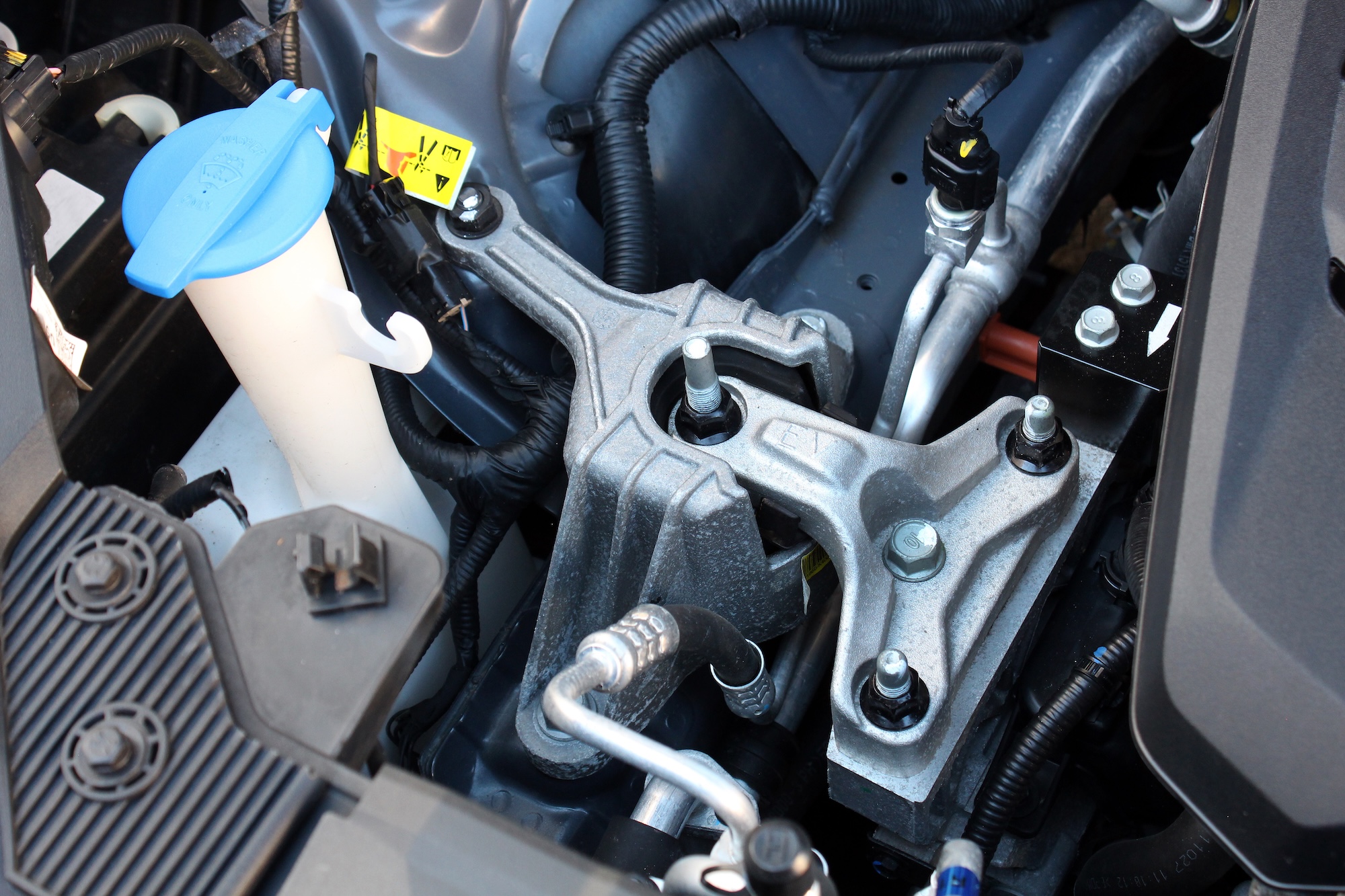
Close-up of an engine mount, the most common cause of car vibration at idle

8 Common Causes of Car Vibration at Idle

1. Worn Engine Mounts (the #1 Cause)

Engine mounts (also called motor mounts) are rubber-and-metal cushions that hold your engine in place and absorb the vibrations it produces. Most engines have between three and five mounts, including the transmission mount.

When a mount wears out, the rubber cracks or separates from the metal, and the engine starts moving more than it should. At idle, you feel that movement as a steady shake through the cabin. Once you’re driving, road noise and engine load mask it, which is why the vibration disappears at speed.

Signs of worn engine mounts:

  • Vibration is much worse when the car is in gear (D or R) than in neutral (N)
  • A clunk or thud when shifting from park to drive or reverse
  • The vibration is steady and rhythmic, not random
  • A visible engine sag or tilt when you look under the hood
  • The shake gets dramatically worse when you turn the AC on

Engine mount failure is especially common after high mileage, hard driving, or years of Northeast Ohio winters that crack the rubber over time.

2. Engine Misfire (Spark Plugs, Coils, or Injectors)

A misfire happens when one or more cylinders isn’t firing properly. The engine runs unevenly, and that unevenness shows up most clearly at idle when there’s no road noise to hide it. At highway speeds, the smoother flow of fuel and air can sometimes mask a mild misfire, but it’ll still be there.

The most common misfire causes are worn spark plugs, failing ignition coils, or clogged fuel injectors. Less commonly, it can be a problem with the valves or compression in a specific cylinder.

Signs of a misfire:

  • Rough, lopey idle that almost feels like the engine wants to stall
  • Check engine light, often flashing if the misfire is severe
  • Loss of power or hesitation when accelerating
  • Worse fuel economy
  • A gas smell from the exhaust

A flashing check engine light specifically means an active misfire that can damage your catalytic converter. Don’t keep driving it.

3. Vacuum Leak

Your engine relies on tightly controlled airflow. A vacuum leak is an unintended opening that lets extra air into the system, throwing off the fuel-to-air ratio. Common leak points include cracked vacuum hoses, a leaking intake manifold gasket, a torn PCV valve hose, or a failing brake booster.

Signs of a vacuum leak:

  • Rough idle that surges up and down
  • A hissing sound under the hood
  • Stalling at stops
  • Check engine light with codes related to lean fuel mixture
  • Idle speed that’s higher than normal

Vacuum leaks tend to get worse in cold weather as rubber components contract and existing cracks open up. That’s a big reason we see a spike in these problems each Northeast Ohio winter.

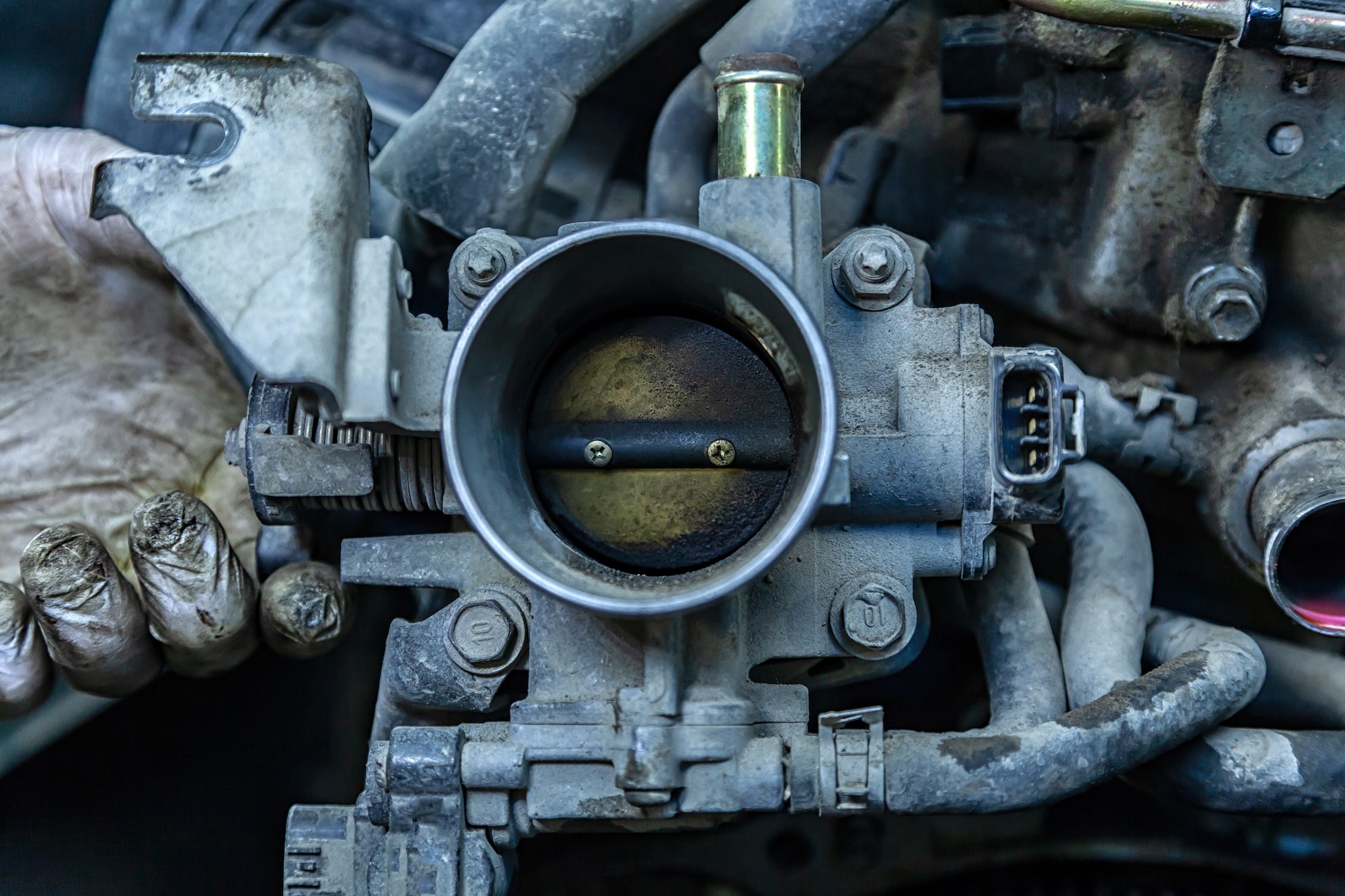
Throttle body with carbon buildup that can cause rough idle and vibration

4. Dirty Throttle Body or Idle Air Control Valve

The throttle body controls how much air enters the engine. Over time, carbon deposits build up on the throttle plate and inside the throttle body bore, which restricts airflow at idle and causes erratic engine speed.

On older vehicles, a separate idle air control (IAC) valve does this job. When the IAC gets dirty or fails, the same kind of rough idle happens.

Signs of a dirty throttle body:

  • Vibration combined with surging idle speed
  • Idle that’s higher or lower than normal
  • Engine stalling when coming to a stop
  • Hesitation when pressing the gas after sitting at idle
  • Has been a long time since the last throttle service

A throttle body cleaning is one of the more affordable drivability services and often resolves rough idle issues completely.

5. Clogged Fuel Injectors

Fuel injectors spray a precise amount of fuel into each cylinder. When they get clogged with deposits, the fuel pattern becomes uneven, the cylinders don’t all get what they need, and the engine vibrates.

Signs of clogged injectors:

  • Rough idle that gets worse the longer you sit
  • Misfire codes
  • Reduced power
  • Worse fuel economy
  • Hard starting, especially when warm

Fuel injector cleaning service can often restore performance without needing replacement, especially if caught before the deposits get too severe.

6. Failing Mass Air Flow Sensor or Oxygen Sensor

These sensors tell your engine’s computer how much air is coming in and how the fuel is burning. When they fail or get contaminated, the computer guesses incorrectly, and the engine runs poorly.

Signs of a sensor problem:

  • Rough idle with no obvious mechanical cause
  • Check engine light with specific sensor codes
  • Worse fuel economy
  • Black smoke from the exhaust (running rich)
  • Hard starting

Sensor problems often look like more serious engine issues, which is why a proper diagnostic scan is the right first step rather than just throwing parts at the problem.

7. Battery or Alternator Issues

This one surprises people. A weak battery or failing alternator can cause idle vibration because the electrical system affects how the engine’s computer controls fuel and ignition. Low voltage at idle can also cause sensors to read incorrectly.

Signs of an electrical cause:

  • Dim headlights at idle
  • Idle vibration that’s worse with electrical loads (headlights, defroster, heated seats)
  • Battery warning light
  • Slow cranking
  • Battery is more than three or four years old

Northeast Ohio winters are particularly hard on batteries, and a battery that survived the cold weather can still be too weak to support proper idle later in the year.

8. Exhaust System Leak or Damage

A crack in your exhaust manifold, a failing flex pipe, or a loose heat shield can cause noticeable vibration at idle. Engine pulses that should be quietly carried out the exhaust instead transmit to the vehicle body.

Signs of an exhaust issue:

  • A ticking, hissing, or buzzing sound that’s worst at idle
  • Stronger exhaust smell
  • A rattle that comes and goes
  • Visible rust or damage to exhaust components

Road salt destroys exhaust systems faster in Northeast Ohio than almost anywhere else. Heat shields are usually the first thing to go, but cracked manifolds and flex pipes are common too.

Specific Vibration Scenarios

My Car Shakes at Idle but Drives Smooth

This is the classic engine-related vibration pattern, and it almost always points to one of three things:

  • Worn engine mounts: The vibration is masked by road motion once you’re moving
  • A mild engine misfire: The misfire is hidden by other engine sounds at speed
  • A vacuum leak: Idle conditions stress the air-fuel ratio more than driving does

If the shake is rhythmic and steady, suspect mounts. If it’s rougher and uneven, suspect a misfire. If it pulses up and down with surging engine speed, suspect a vacuum leak or throttle body.

Vibration Gets Worse When the AC Is On

When you turn the AC on, the compressor adds extra load to the engine. Two things happen: the engine works harder at idle, and the engine tries to physically move more in its mounts.

If your idle vibration gets dramatically worse with the AC on, the most likely cause is worn engine mounts, since they can’t absorb the additional movement. A weak engine that’s already running rough also gets worse under AC load, so a misfire or vacuum leak can show up more clearly too.

Car Vibrates in Drive but Not in Neutral

If you can feel the shake while in gear at a stoplight, but it smooths out when you shift to neutral, that’s an engine mount or transmission mount problem almost every time. The mounts are what isolate engine motion from the transmission and chassis, and bad mounts can’t do their job when the engine is loaded against the transmission.

Vibration With the Check Engine Light On

A check engine light alongside idle vibration almost always means a misfire, a sensor issue, or an emissions-related problem. The light is your car’s computer telling you it has specific information about what’s wrong. A diagnostic scan reads those codes, which gives our technicians a clear starting point instead of guessing.

A flashing check engine light is a different story. That means an active misfire that’s damaging your catalytic converter right now. Stop driving and call for help.

Idle Shake With a Hissing Sound

A hiss under the hood combined with idle vibration is a strong signal of a vacuum leak. The hiss is air being sucked through the opening that shouldn’t be there. Sometimes you can locate the leak by listening, but most are small enough to require a smoke test for proper diagnosis.

How to Tell What’s Actually Causing Your Idle Shake

Here’s the quick reference our technicians use:

  • Steady, rhythmic shake worse in gear than neutral: Engine mounts
  • Rough, lopey idle with check engine light: Misfire (plugs, coils, or injectors)
  • Surging idle speed up and down: Vacuum leak or dirty throttle body
  • Shake gets worse with AC on or electrical load: Mounts, weak battery, or weak engine
  • Vibration with hissing under the hood: Vacuum leak
  • Idle shake with ticking or buzzing noise: Exhaust system
  • Shake with hard starting or stalling: Throttle body, injectors, or sensors
  • Shake with reduced power and bad fuel economy: Sensors or injectors

These are starting points, not final answers. Several of these can happen at once, and a proper diagnostic scan plus visual inspection is the only way to know for sure.

Is It Safe to Drive a Car That Vibrates at Idle?

In most cases, yes, at least short-term. A mild idle vibration from worn mounts or a small vacuum leak isn’t going to leave you stranded. But “safe to drive” isn’t the same as “safe to ignore.”

Two big exceptions:

  • A flashing check engine light. Active misfires destroy catalytic converters fast, and a converter replacement is one of the more expensive emissions repairs out there. Stop driving and get it diagnosed.
  • Severe vibration. If the engine feels like it’s about to fall out of the car, or if you smell fuel, or if the car is stalling repeatedly, you may have a serious problem that’s about to get worse. Bring it in instead of testing how far you can push it.

For everything else, schedule an inspection soon. Idle problems gradually turn into driving problems, and what’s a quick tune-up today becomes a much bigger job if you wait too long.

Why Northeast Ohio Drivers See This Problem More Often

Idle vibration is more common in our region than in milder climates, and there are a few reasons why:

  • Cold winter starts stress engine mounts and rubber vacuum hoses, causing cracks
  • Road salt corrodes electrical connections, sensors, and exhaust components
  • Stop-and-go traffic in metro Cleveland, Akron, and the inner suburbs means engines spend a lot of time idling, which accelerates carbon buildup in the throttle body and on intake valves
  • Extended winters keep cars sitting at idle to warm up, which builds up deposits faster
  • Hilly terrain in areas like Seven Hills, Garfield Heights, and the south side of Akron loads engine mounts harder than flat driving

The good news is that all of these issues respond well to regular maintenance. Spark plugs, fuel injector service, throttle body cleaning, and periodic sensor inspections head off most idle vibration problems before they start.

How Rad Air Diagnoses Idle Vibration

When you bring a vibrating car to any Rad Air location, here’s what to expect:

  • Diagnostic scan: We pull codes from your engine computer to see what your car is reporting
  • Visual inspection: Engine mounts, vacuum hoses, belt condition, exhaust system, and fluid leaks
  • Idle test: We listen, feel, and watch the engine behavior at idle in different conditions
  • Throttle body and intake check: Looking for carbon buildup and proper operation
  • Sensor and electrical tests: Including battery and alternator output where relevant
  • Spark plug and ignition check: Especially when misfire codes are present
  • Clear written estimate: Before any work begins, you get an explanation of what’s wrong, what we recommend, and what the repair will cost

Our Drivability Issues and Tune-Ups service page covers more on what’s involved. For deeper engine work, our Engine and Transmission Repair team handles it. Either way, you get a complete answer before any work gets done.

Get Your Idle Shake Diagnosed at Any of Our 11 Northeast Ohio Locations

A vibrating engine is your car telling you something. Whether it’s a worn mount, a tired spark plug, or a sensor that needs replaced, the Rad Air team can find the problem and get it fixed.

Visit any of our 11 locations across Northeast Ohio:

1200 West Portage Trail, Akron, OH 44313

(330) 680-5718

1277 Hamilton Avenue, Cleveland, OH 44114

(216) 438-2782

3904 Medina Road, Fairlawn, OH 44333

(330) 269-7665

5266 Turney Road, Garfield Heights, OH 44125

(216) 438-2775

767 N Court St., Medina, OH 44256

(330) 679-5242

6565 Pearl Road, Parma Heights, OH 44130

(440) 220-6598

7893 Broadview Road, Seven Hills, OH 44131

(440) 373-4408

5749 Applecreek Rd, Smithville, OH 44677

(330) 294-9030

12922 Pearl Road, Strongsville, OH 44136

(440) 574-7298

27051 Detroit Road, Westlake, OH 44145

(440) 328-8924

29257 Anderson Road, Wickliffe, OH 44092

(440) 420-4383

Ready to get rid of that idle shake? Schedule your service online and our team will get your car in fast. Want a quick look first? Stop by for a Free Pit Service, no appointment needed.

Shaking at Every Stoplight? Let’s Find Out Why.

Worn mounts, a misfire, a vacuum leak, or a sensor — idle vibration has a specific cause, and guessing gets expensive. Rad Air Complete Car Care will diagnose it right at any of our 11 Northeast Ohio locations.
Schedule Online