Search Bar

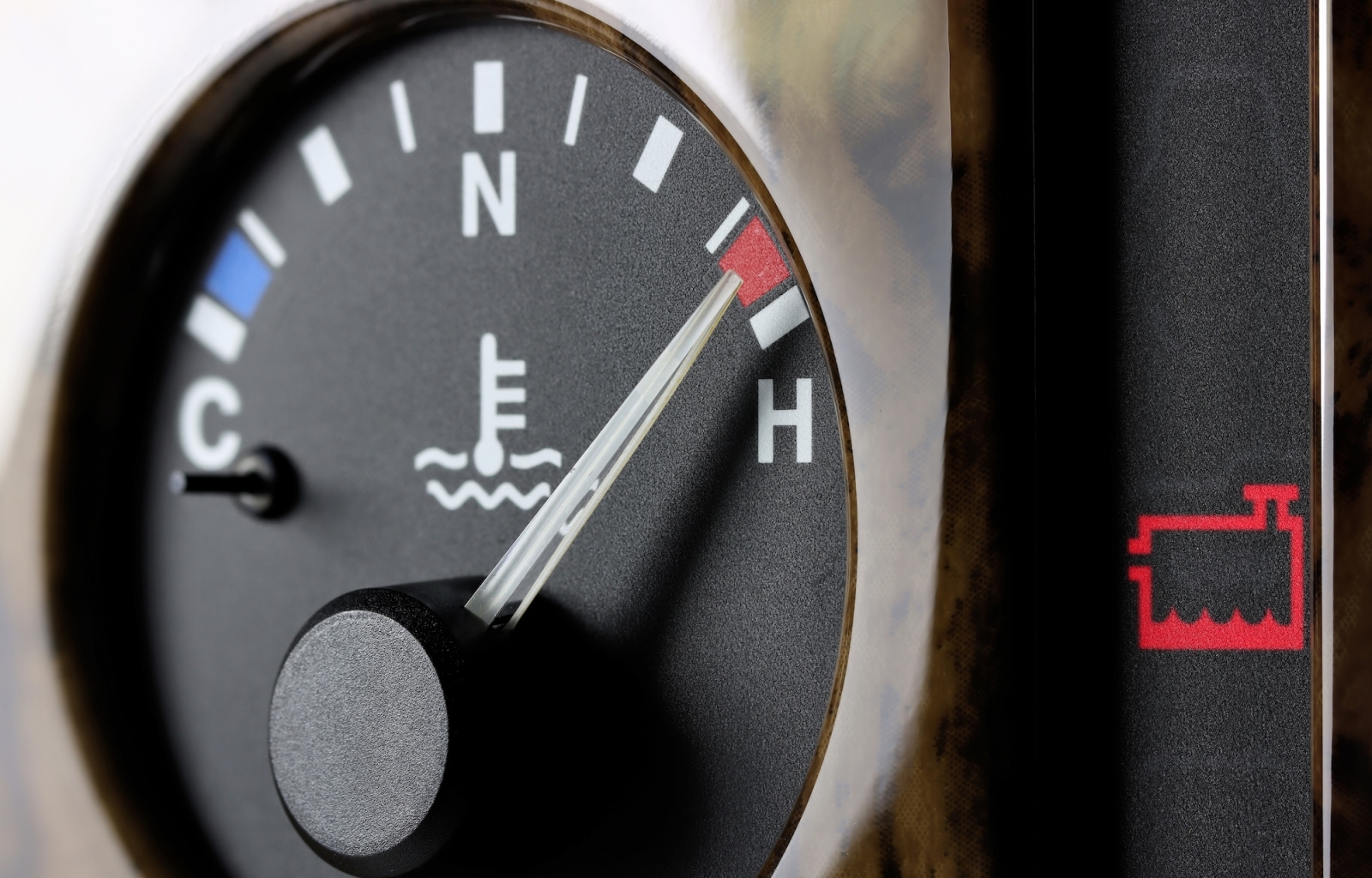
It’s the middle of July. You’re on I-71 heading to a family weekend at the lake. Halfway through the drive, you glance at the dashboard and see the temperature gauge climbing into the red. The check engine light is on. There might even be a wisp of steam coming from under the hood.
If that’s where you are right now, scroll straight to the next section. The first job is to get yourself safe. After that, we’ll walk through how to tell whether your car is really overheating, what’s causing it, and what every Northeast Ohio driver should know about keeping their cooling system healthy through the summer.
The team at Rad Air Complete Car Care has been fixing overheating cars across Northeast Ohio since 1975, and summer is by far our busiest season for it.
If your temperature gauge is in the red or you see steam or smoke coming from the hood, follow these steps immediately.
Continuing to drive an overheating car is one of the most expensive mistakes you can make. An inexpensive thermostat that fails and gets ignored can warp a cylinder head, blow a head gasket, or destroy an engine entirely. Pull over.
The temperature gauge is the obvious one, but it’s not the only sign. Sometimes drivers ignore the gauge until other symptoms make the problem impossible to miss. Here’s what to watch for.
Dashboard warning signs:
Visual signs:
Performance signs:
If you notice any combination of these, treat it as overheating until proven otherwise. Cooling system problems get worse fast.
The radiator is responsible for dissipating heat from the coolant before it cycles back through the engine. Over years of use, radiators accumulate scale, rust, and debris that restricts coolant flow. They can also get bent fins or punctures from rocks and road debris.
Signs of a radiator issue:
Regular cooling system flushes prevent a lot of this. Our cooling system flush service keeps the system clean and the coolant fresh.
The radiator cap doesn’t just close the system. It also maintains the pressure that lets coolant function at high temperatures without boiling. A failed cap can release pressure too early, causing coolant to boil and the engine to overheat even with a full system.
Signs of a bad cap:
This is the cheapest, simplest cause to fix, and it often gets overlooked. Always worth checking first.
The head gasket seals the joint between the engine block and the cylinder head. When it fails, coolant can leak into the combustion chamber, exhaust gas can pressurize the cooling system, or coolant can mix with engine oil. Any of these causes serious overheating and serious engine damage.
Signs of a blown head gasket:
Head gasket repair is expensive, but ignoring a head gasket leak leads to catastrophic engine failure. If you suspect one, don’t drive the car.
The serpentine belt drives the water pump on many vehicles. If it breaks, coolant stops circulating immediately. Similarly, a burst radiator hose dumps coolant fast.
Signs of a belt or hose failure:
These are usually sudden failures, not gradual ones. Inspecting belts and hoses during regular maintenance prevents most of them.
Some overheating problems come with very specific symptoms that point to a particular cause. Here are the most common scenarios we see.
If your reservoir looks full but the engine is still running hot, the coolant probably isn’t flowing or transferring heat properly. The most likely culprits are:
A full reservoir doesn’t mean the system is working. It just means there’s enough fluid. Diagnosis requires checking flow, pressure, and component function.
Sometimes the gauge climbs higher than normal but doesn’t reach the red zone. This is the early warning stage, and it usually means one of these:
This is the ideal time to get the system checked. Catching a cooling problem when the gauge is just starting to rise saves you from being stranded later.
If your heater stopped working at the same time your engine started overheating, the system is almost certainly low on coolant. The heater core needs coolant flow to make heat, and air pockets or low fluid will kill the heater first, then take down the whole cooling system.
Other possibilities include a stuck thermostat, a clogged heater core, or a failing water pump. Either way, no heat plus overheating is a sign to stop driving and get the car looked at.
If you pulled over because of overheating and now the car won’t start, you may be dealing with one of several issues:
The longer you drove while overheating, the worse the damage tends to be. Don’t keep cranking the starter, since that can cause additional damage. Get it towed to a shop and have it diagnosed.
White smoke that smells sweet is burning coolant, which usually means a head gasket leak or a cracked cylinder head. The car may not be overheating yet because the leak is small, but it will be soon. White smoke without overheating is an early warning. Take it seriously.
If the white “smoke” is actually just steam on a cold morning that disappears after a minute or two, that’s normal condensation. Sweet-smelling white smoke that keeps coming out as you drive is not.
No. Not even a little bit.
The temperatures inside an overheating engine can warp metal, melt seals, and destroy components in minutes. A cooling system repair that would have cost a few hundred dollars in parts can turn into a full engine replacement if you push it too far. We see this every summer.
If your gauge is climbing into the red, pull over. If you’re seeing steam, pull over. If your warning lights are on, pull over. Your car is telling you something important, and the cost of ignoring it is much higher than the cost of a tow.
Even though Northeast Ohio isn’t Arizona, our summer conditions hit cooling systems harder than people think:
Most overheating failures happen on the first really hot day of the summer or during a long road trip. The hotter the weather, the less margin your cooling system has when something is starting to go wrong.
Overheating is the most common roadside breakdown reason during summer travel. If you’re loading up the family for a trip to Cedar Point, Geneva-on-the-Lake, Hocking Hills, or anywhere else, a quick cooling system inspection before you leave can save your vacation.
A proper pre-trip cooling system check includes:
It’s one of the easier ways to drive into your summer with confidence.
When you bring an overheating car to any Rad Air location, here’s what to expect:
We handle every part of the cooling system, from a simple coolant flush to a full radiator replacement, water pump, thermostat, head gasket repair, and everything in between. Our Cooling and Radiator Repair service page has more detail on what we cover, and the coupons page lists current savings on fluid services and inspections.
Whether your car overheated on the highway, you’re seeing the gauge creep up, or you want a pre-summer inspection so it doesn’t happen at all, the Rad Air team is ready to help.
Visit any of our 12 locations across Northeast Ohio:
Worried about your cooling system? Schedule your service online and our team will get your car in fast. For a quick visual check, stop by for a Free Pit Service, no appointment needed.
A leak, a thermostat, a fan, or a water pump — cooling problems are cheap to fix early and brutally expensive to ignore. Rad Air Complete Car Care will pressure test, diagnose, and fix it right at any of our 12 Northeast Ohio locations.