Car AC Blowing Hot Air? Common Causes and How to Fix It

July 21, 2026

It’s the first real heat wave of the Northeast Ohio summer. You hop in your car for the commute, crank the AC, and instead of cool relief, the vents blast hot air straight at your face. Maybe it worked fine yesterday. Maybe it’s been getting weaker for weeks. Either way, you’re sweating through your shirt before you’ve made it to the end of the driveway.

You’re not alone. Every June and July, the team at Rad Air Complete Car Care gets flooded with calls from Northeast Ohio drivers asking the same question: why is my car AC blowing hot air?

The good news is that car AC problems almost always come down to one of eight common causes. Some are quick, inexpensive fixes. Others need professional diagnostic equipment to track down. This guide walks through each one, helps you narrow down what’s happening with your car, and explains when it’s time to bring it in.

The Quick Answer

If your car’s AC is blowing hot air, the most likely cause is low refrigerant from a leak. Modern car AC systems are sealed, so refrigerant doesn’t get “used up” the way fuel does. If you’re low, something is leaking. Other common culprits include a failed compressor, a bad condenser, a stuck blend door actuator, or electrical problems. The only way to know for certain is a proper diagnosis with the right tools.

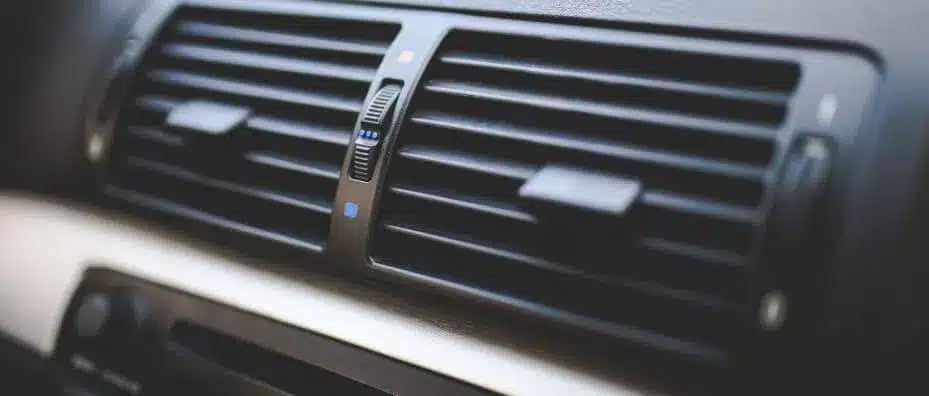
Driver adjusting the air conditioning controls in a car dashboard

8 Reasons Your Car AC Is Blowing Hot Air

1. Low Refrigerant (the #1 Cause)

Refrigerant is the chemical that absorbs heat from inside your car and releases it outside. Without enough refrigerant, your AC system simply can’t cool the air. And since the system is sealed from the factory, low refrigerant always means there’s a leak somewhere.

Leaks can develop in a lot of places: hose connections, the compressor seal, the condenser (especially if hit by road debris), the evaporator inside the dash, or any of the O-rings throughout the system. Some leaks are huge and obvious. Most are slow and tiny, sometimes only losing a few ounces a year.

Signs it’s low refrigerant:

  • AC was working fine, then gradually got weaker over weeks or months
  • AC works on short trips but stops cooling on longer drives
  • You hear a hissing sound when you turn the AC off
  • Visible oily residue near AC components (refrigerant carries oil)

Why a DIY recharge kit is usually a bad idea: Those cans of refrigerant at the auto parts store seem like an easy fix, but they often make things worse. They mask the underlying leak, add stop-leak chemicals that can clog the system, and frequently overcharge the AC, which damages the compressor. We’ll talk more about this below.

2. Failed or Failing AC Compressor

The compressor is the heart of your AC system. It pressurizes the refrigerant and circulates it through the system. When it fails, cooling stops completely.

Compressors fail for several reasons: low refrigerant running the compressor dry, electrical issues with the clutch that engages it, internal mechanical wear, or contamination from a previous failure that wasn’t properly cleaned out.

Signs of compressor problems:

  • Loud grinding, squealing, or clicking when you turn on the AC
  • The AC clutch doesn’t engage (you’d hear a small click under the hood when AC turns on)
  • AC blows hot air all the time, no matter the setting
  • The serpentine belt looks worn or has been thrown

Compressor work is one of the more involved AC repairs because the whole system has to be evacuated, cleaned, and refilled. It’s also one where shortcuts cause repeat failures.

3. Bad Condenser

The condenser sits at the very front of your car, right behind the grille. Its job is to release the heat your AC system pulls from the cabin. Because it’s exposed up front, it takes a beating from rocks, road debris, hail, and the occasional bug-related summer carnage.

A bent, clogged, or damaged condenser can’t release heat properly, so the refrigerant stays hot, and your AC blows warm air.

Signs of a bad condenser:

  • Visible damage like bent fins, dents, or punctures
  • AC works at highway speeds but blows warm when you’re stopped at a light (poor airflow through a damaged condenser)
  • AC blows hot air only after the car has warmed up
  • Recent rock chip, hail damage, or front-end impact

4. Stuck Blend Door Actuator (Often Overlooked)

Inside your dashboard is a small flap called the “blend door” that controls how much hot air from the heater core and cold air from the AC evaporator mix together before reaching the vents. A small electric motor called the blend door actuator moves that flap.

When the actuator fails or the door gets stuck, you can have a perfectly working AC system that still blows hot air, because the door is sending hot air to the vents no matter what setting you choose.

Signs of a blend door problem:

  • Hot air from one side of the dash, cold air from the other (in dual-zone systems)
  • AC compressor sounds normal and engages, but cabin temperature won’t change
  • A clicking or tapping sound from behind the dashboard when you change temperature settings
  • Temperature setting changes have no effect on air temperature

This is one of those problems people often misdiagnose as a refrigerant issue. A proper inspection catches it quickly.

5. Bad Cooling Fan or Electrical Fan Motor

Your condenser at the front of the car needs airflow to release heat. At highway speeds, you get plenty of airflow naturally. But when you’re stopped or moving slowly, electric cooling fans pull air through the condenser. If those fans fail, the condenser can’t dump heat, and your AC stops cooling.

Signs of a cooling fan issue:

  • AC works fine on the highway but blows warm at stoplights or in slow traffic
  • Engine temperature creeps up in stop-and-go traffic
  • You don’t hear the cooling fan running when the AC is on
  • Both AC performance and engine cooling get worse together

6. Electrical Problems

Modern car AC systems rely on a network of sensors, switches, fuses, relays, and control modules. Any one of them failing can shut down the system or cause it to blow hot air.

Common electrical culprits:

  • Blown AC fuse
  • Bad AC relay
  • Failed pressure switch (the system shuts down to protect itself)
  • Wiring damage from rodents (more common than you’d think)
  • Failing climate control module

Signs of an electrical issue:

  • AC stopped working suddenly, with no warning
  • AC works intermittently, sometimes cold, sometimes hot
  • Other electrical issues happening at the same time (dim lights, dashboard warnings)
  • No click from the compressor clutch when AC turns on

7. Clogged Cabin Air Filter

Most newer vehicles have a cabin air filter that cleans the air coming into the cabin. When that filter gets packed with dirt, leaves, and debris, it dramatically restricts airflow, even if the AC itself is cooling properly.

Signs of a clogged cabin filter:

  • Weak airflow from the vents, even at the highest fan setting
  • Musty or moldy smell when AC is on
  • Air feels slightly cool right at the vent, but never cools the cabin
  • It’s been more than a year (or 15,000 miles) since the last filter change

This is the cheapest, easiest AC complaint to fix, and a lot of people don’t even know their car has this filter. It’s a quick check during any Rad Air Free Pit Service stop.

8. Engine Cooling System Problems

Your engine cooling system and your AC system are separate, but they share real estate at the front of the car. If your engine is overheating or running too hot, your AC will often shut down or stop cooling effectively to protect the engine.

Signs the engine cooling system is the real problem:

  • Engine temperature gauge running higher than normal
  • Coolant warning light on
  • AC works fine when engine is cold, blows hot once engine warms up
  • Visible coolant leaks under the car

In this case, fixing the AC means fixing the cooling system first. Our team handles both, so you’re not bouncing between shops.

“My Car AC Blows Cold Then Hot” (A Specific Scenario)

This one comes up so often it deserves its own section. If your AC starts out cold and then turns warm after 10 or 15 minutes of driving, you’re usually dealing with one of three things:

  1. Refrigerant level is borderline low. There’s enough to cool initially, but as pressures shift the system can’t keep up.
  2. The evaporator is freezing over. Ice builds up on the evaporator, blocks airflow, and the air going across it gets warmer until the ice melts. Then it cools again. This cycle repeats.
  3. The compressor clutch is cycling on and off. Often caused by a failing pressure switch or low refrigerant.

All three need a professional diagnosis with proper gauges and tools.

How to Tell What’s Actually Wrong

Here’s a quick reference our technicians use when a customer first describes the problem:

  • AC blows hot air all the time, with a clicking or grinding noise: Most likely compressor
  • AC blows hot air only at idle or low speeds: Cooling fan or condenser issue
  • AC blows hot air all the time, no noise: Often low refrigerant or electrical
  • AC blows cold for a while then warm: Refrigerant level, icing evaporator, or pressure switch
  • One side hot, one side cold: Blend door actuator
  • Weak airflow but the air feels cool at the vent: Cabin air filter or blower motor
  • No air at all from the vents: Blower motor or electrical
  • AC was fine, then stopped suddenly: Electrical (fuse, relay, switch)

These are starting points to narrow things down, not final answers. AC systems are interconnected, so a single root cause (like a refrigerant leak) can produce multiple symptoms.

Why You Shouldn’t Just Buy a Recharge Can

Walk into any auto parts store in July and you’ll see endcaps full of refrigerant recharge cans promising a “5-minute fix.” Here’s why our technicians don’t recommend them:

  • They mask leaks instead of fixing them. If your refrigerant is low, you have a leak. Adding more refrigerant gets you a few weeks of cold air before you’re back to square one.
  • The stop-leak additives clog AC components. Many recharge cans include sealants that can plug the orifice tube, expansion valve, or compressor. What could have been a simple leak repair turns into a full system rebuild.
  • They cause overcharging. Too much refrigerant is just as bad as too little. Overcharged systems run high pressures that damage the compressor.
  • Federal law requires certified technicians for refrigerant work. EPA Section 609 governs automotive refrigerant handling, and there are good environmental reasons for it.
  • Newer vehicles use 1234yf refrigerant. The cheap cans at the store usually contain R-134a, which is the wrong refrigerant for many cars 2017 and newer. Putting the wrong refrigerant in your system causes serious damage. Our Garfield Heights location specializes in 1234yf systems.

If your AC isn’t working, get it diagnosed properly. You’ll save money in the long run.

Is It Safe to Drive Without AC in the Summer?

Mechanically, your car runs fine without working AC. The bigger concerns are personal safety and comfort, especially during Northeast Ohio’s hot, humid stretches.

Take it seriously if:

  • You’re driving with kids or elderly passengers
  • You’re driving with pets in the car
  • You commute long distances or sit in heavy traffic
  • You have a medical condition affected by heat
  • You can’t roll down the windows for some reason (broken motor, highway driving, security)

A car cabin in direct summer sun can reach 130 degrees or hotter in minutes. That’s not just uncomfortable. It’s genuinely dangerous. If your AC is out, get it fixed before things get really hot, not after you’ve already cooked through a few commutes.

Why Northeast Ohio Summers Are Hard on Car AC

Northeast Ohio puts car AC systems through a lot more than most people realize:

  • High humidity means your AC has to work much harder to dehumidify the air, not just cool it
  • Big temperature swings from a 30 degree morning to a 90 degree afternoon stress every seal and hose in the system
  • Road salt from winter corrodes condensers, lines, and electrical connections
  • Summer storms and hail routinely damage front-mounted condensers
  • Long winters mean AC systems sit unused for months, which lets seals dry out and refrigerant slowly leak

Most AC failures happen on the first hot day of the year, after the system has been sitting all winter. By the time you notice the AC isn’t working, the line at every shop in town is already out the door. Our advice: if your AC was weak last summer, get it checked in early spring, not late June.
How Rad Air Diagnoses and Fixes Car AC Problems

Rad Air technician servicing a vehicle's air conditioning system

Here’s what to expect when you bring your car in:

  • Performance test: We measure the actual temperature coming out of your vents and compare it to ambient temperature
  • Visual inspection: We check all visible components for damage, leaks, and corrosion
  • System pressure check: Using proper AC manifold gauges to measure low and high side pressures
  • Leak detection: UV dye, electronic leak detectors, or both, depending on what the system is doing
  • Electrical diagnostic: Scanning for codes and testing relays, switches, and the compressor clutch
  • Clear written estimate: Before any work begins, you get an explanation of what’s wrong, what your options are, and what it will cost
  • Proper repair: Whether it’s a leak repair, compressor replacement, blend door actuator, or full system service, we use the right parts and the right refrigerant for your vehicle

We also handle AC repair on hybrid and electric vehicles, which have unique requirements that not every shop is qualified to service. You can read more on our Air Conditioning Repair service page and check the coupons page for current AC service savings.

Get Your AC Fixed at Any of Our 11 Northeast Ohio Locations

Don’t sweat through another commute. Whether your AC stopped working overnight, has been getting weaker all summer, or only blows cold sometimes, the Rad Air team has the tools and training to find the problem and get you cool again.

Visit any of our 11 locations across Northeast Ohio:

1200 West Portage Trail, Akron, OH 44313

(330) 680-5718

1277 Hamilton Avenue, Cleveland, OH 44114

(216) 438-2782

3904 Medina Road, Fairlawn, OH 44333

(330) 269-7665

5266 Turney Road, Garfield Heights, OH 44125

(216) 438-2775

767 N Court St., Medina, OH 44256

(330) 679-5242

6565 Pearl Road, Parma Heights, OH 44130

(440) 220-6598

7893 Broadview Road, Seven Hills, OH 44131

(440) 373-4408

5749 Applecreek Rd, Smithville, OH 44677

(330) 294-9030

12922 Pearl Road, Strongsville, OH 44136

(440) 574-7298

27051 Detroit Road, Westlake, OH 44145

(440) 328-8924

29257 Anderson Road, Wickliffe, OH 44092

(440) 420-4383

Ready to fix your car’s AC? Schedule your AC service online and we’ll get you in fast. Looking for a quick check first? Stop by for a Free Pit Service, no appointment needed.

Blowing Hot Air? Let’s Get You Cool Again.

A leak, a compressor, a blend door, or a blown fuse — AC problems have a specific cause, and a can from the parts store won’t find it. Rad Air Complete Car Care will diagnose it right at any of our 11 Northeast Ohio locations.

Schedule Online