Why Does My Steering Wheel Shake When I Brake? What It Means and What to Do About It

June 18, 2026

You feel it first on the highway. You come up on slower traffic, press the brake pedal, and the steering wheel starts to pulse in your hands. It might be subtle at first. A slight vibration that comes and goes. But over a few weeks, it gets stronger. Now every time you brake from any real speed, the whole steering column trembles, and you can feel it through the floor too.

This is one of the most common complaints we hear at Rad Air Complete Car Care, and it is also one of the most misunderstood. Drivers assume the brakes are failing, or the tires are bad, or something expensive just broke. In most cases, the cause is more specific than that, and catching it early keeps the repair on the simpler side.

After 25 years of chasing down steering wheel vibrations across Northeast Ohio, I can tell you that the answer to why does my steering wheel shake when I brake almost always comes back to one of three things: rotor condition, tire health, or worn suspension components. The trick is figuring out which one, because each cause produces a slightly different symptom, and the wrong diagnosis leads to the wrong repair.

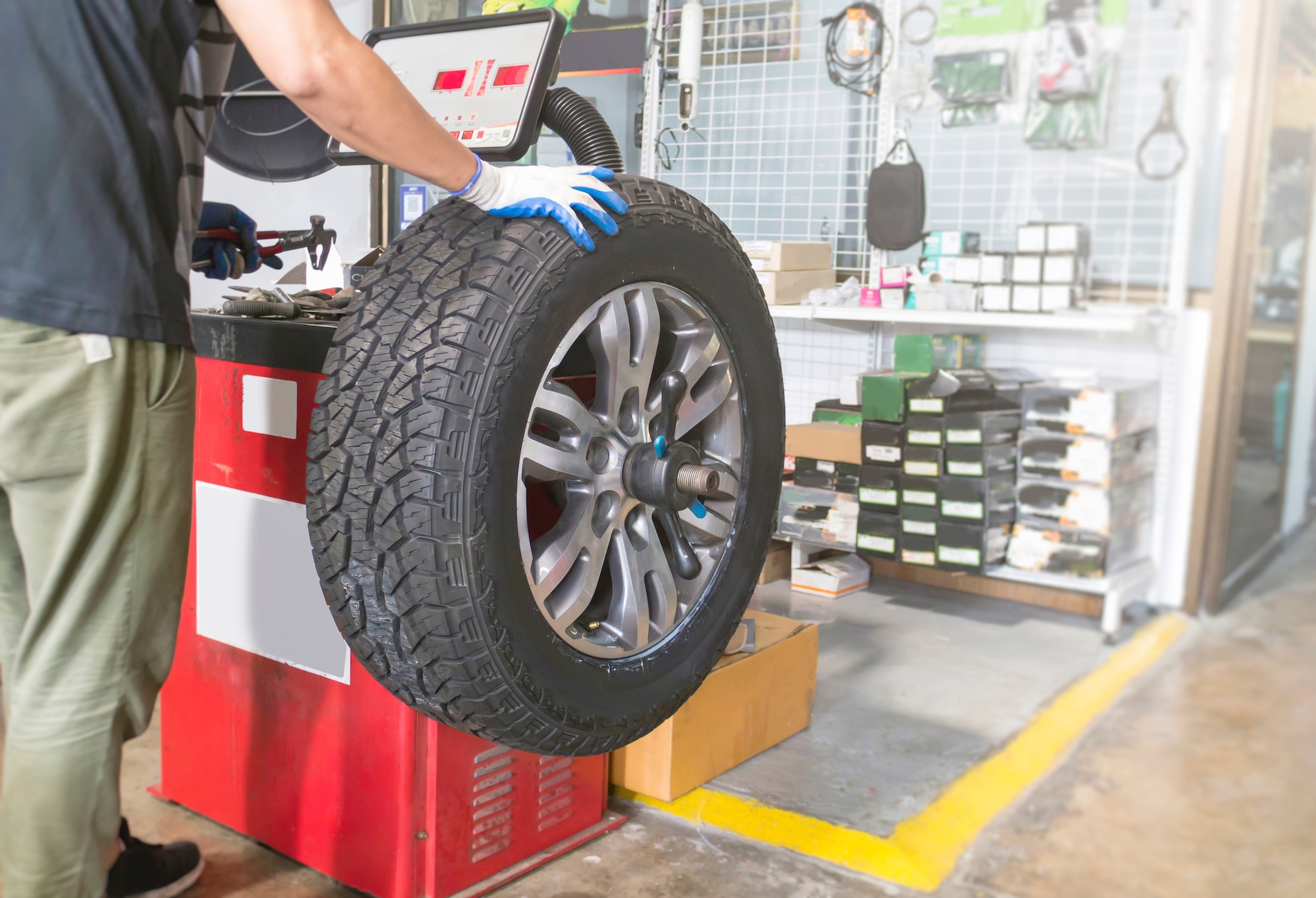
Steering wheel vibration during braking being diagnosed at Rad Air Complete Car Care

Shaking That Only Happens When You Brake

If your steering wheel shakes specifically when you press the brake pedal and stops shaking when you let off, the problem is almost certainly in the brake system. The most common cause is variation in your brake rotors.

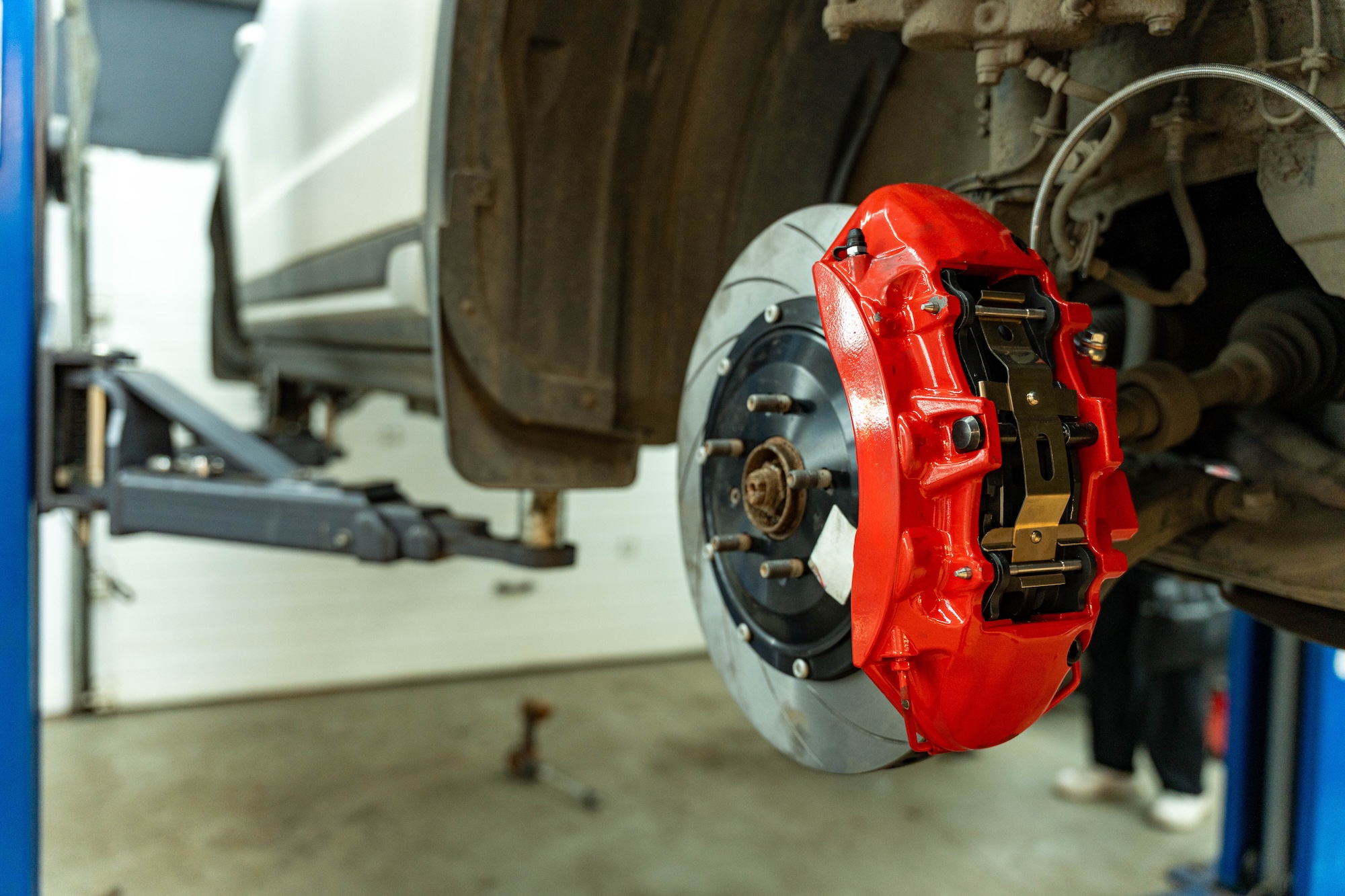
Rotors are the flat metal discs that your brake pads clamp against to slow the vehicle. Over time and under repeated heating and cooling cycles, rotors can develop uneven thickness. The industry calls this thickness variation, and it does not take much to create a noticeable vibration. A difference of just a few thousandths of an inch across the rotor surface is enough to produce a pulsation you can feel through the steering wheel every time the pad contacts a thicker spot during rotation.

This is not always what people mean when they say warped rotors, but the effect is the same. The pad hits a high spot, then a low spot, then a high spot again, and that inconsistency translates directly into the steering column as a rhythmic shake. The faster you are going when you brake, the more pronounced it feels, because the wheel is rotating faster and hitting those uneven spots more frequently.

We had a customer at our Strongsville shop who came in convinced his front axle was damaged after the shaking started on I-71 during his morning commute. He was braking from 65 mph in heavy traffic and the steering wheel was shaking hard enough that he pulled onto the shoulder. When we measured his rotors, the left front had over .003 inches of thickness variation. The right front was marginal. We resurfaced both rotors, replaced the pads, and the vibration was completely gone. No axle damage. No major repair. Just rotors that had developed uneven wear from thousands of heat cycles in stop-and-go commuting.

Heavy braking accelerates this process. So does riding the brakes on long downhill grades. Drivers who commute on I-77 through the Akron area or deal with the hills around Seven Hills and Parma Heights tend to see rotor issues develop faster than drivers on flat, steady routes. The repeated heating and cooling of the rotor surface is what creates the variation, and the more aggressively or frequently you brake, the faster it develops.

Another brake-related cause is a sticking caliper. If a caliper does not retract fully when you release the brake pedal, it keeps light pressure on the rotor even when you are not braking. That constant friction generates heat on one side, which accelerates uneven wear on that rotor. The result is a pulsation that starts mild and worsens quickly. A sticking caliper also tends to cause the vehicle to pull slightly to one side during braking, which is an additional clue our technicians look for during diagnosis.

Steering Wheel Shakes While Driving, Not Just Braking

A steering wheel that shakes at certain speeds regardless of whether you are braking points to a different cause than rotors. The issue is more likely tire-related. Tires that are out of balance produce a vibration that typically shows up in a specific speed range, often between 55 and 70 mph, and stays consistent as long as you hold that speed.

Wheel balance involves small weights attached to the rim that counteract slight variations in tire weight distribution. When a balance weight falls off, which happens more than you would expect on Northeast Ohio roads full of potholes and rough patches, the tire develops an imbalance that creates a vibration at speed. The vibration may come and go depending on your exact speed, which is why some drivers notice it on the highway but not around town.

A customer at our Wickliffe location came in last winter with a vibration that started around 60 mph and disappeared above 75. Classic balance issue. One of the front wheels had lost a clip-on weight, probably from a pothole on Route 2 near the lakeshore. We rebalanced all four wheels and the vibration was gone on the test drive. The repair took less than an hour.

Tire condition matters here too. A tire with a shifted belt, internal damage from a hard pothole impact, or severe uneven wear from an alignment problem can produce vibrations that no amount of balancing will fix. We check for these conditions during every vibration diagnosis because a bad tire can mimic a balance problem and lead to a wasted repair if nobody looks closely enough.

Vibration at Low Speeds and Around Town

A steering wheel that shakes at low speeds or produces a constant shimmy during normal driving points toward suspension and steering components. Worn tie rod ends, loose ball joints, failing wheel bearings, and deteriorated control arm bushings can all create vibrations that show up differently than brake or tire issues.

Wheel bearings are worth mentioning specifically because they are common in our climate. Road salt, moisture, and temperature extremes all shorten bearing life. A failing wheel bearing often produces a humming or growling noise that changes with speed, along with a vibration that may be felt through the steering wheel or the floor. The noise and vibration typically get worse when turning in one direction because the load shifts onto the affected bearing.

Suspension-related vibrations tend to be less rhythmic than brake or tire issues. Instead of a steady pulse, you might feel a general looseness or shimmy, especially over bumps or uneven pavement. Drivers around Cleveland and Garfield Heights deal with road surfaces that stress suspension components hard, and we see worn tie rods and ball joints on vehicles with surprisingly moderate mileage simply because of the roads they travel every day.

Rad Air technician measuring rotor and inspecting components during a vibration diagnosis

Why Accurate Diagnosis Matters

The reason I am breaking these causes into separate categories is that each one requires a different repair. Resurfacing rotors will not fix a tire balance problem. Balancing tires will not stop a rotor pulsation. Replacing a wheel bearing will not correct a caliper that is sticking. If the diagnosis is wrong, the vibration comes back and you have spent money on a repair that did not address the cause.

At Rad Air, our diagnostic process for steering wheel vibrations starts with a conversation and a road test. We want to know exactly when the shaking happens: only when braking, only at certain speeds, all the time, worse on the highway, worse around town. That information immediately narrows down which system to focus on.

From there, we measure rotor thickness and runout with precision gauges. We check tire condition, tread wear patterns, and balance. We inspect suspension components for play, looseness, and wear. We test wheel bearings for noise and roughness. The goal is to find the specific cause, confirm it with measurement, and fix it once.

We had a driver at our Fairlawn shop who had been to two other places for a steering wheel vibration. The first shop replaced the front brake pads and rotors. The vibration came back within a month. The second shop rebalanced all four tires. Still there. When he came to us, we found a worn inner tie rod on the driver side that had enough play to create a shimmy under braking that felt identical to a rotor pulsation. The previous shops were chasing the symptom without testing the full system. We replaced the tie rod, aligned the vehicle, and the vibration was resolved. Two unnecessary repairs could have been avoided with a complete diagnosis from the start.

Schedule Your Vibration Diagnosis at Rad Air Complete Car Care

If your steering wheel shakes when you brake, vibrates at highway speed, or shimmies around town, bring the vehicle in and let us find the cause. We will test the brakes, tires, suspension, and steering system and tell you exactly what is producing the vibration before recommending any work.

Rad Air Complete Car Care has 11 locations across Northeast Ohio, and every one follows the same thorough diagnostic process:

Akron
1200 West Portage Trail, Akron, OH 44313

(330) 680-5718

Downtown Cleveland
1277 Hamilton Avenue, Cleveland, OH 44114

(216) 438-2782

Fairlawn
3904 Medina Road, Fairlawn, OH 44333

(330) 269-7665

Garfield Heights
5266 Turney Road, Garfield Heights, OH 44125

(216) 438-2775

Medina
767 N Court St., Medina, OH 44256

(330) 679-5242

Parma Heights
6565 Pearl Road, Parma Heights, OH 44130

(440) 220-6598

Seven Hills
7893 Broadview Road, Seven Hills, OH 44131

(440) 373-4408

Smithville
5749 Applecreek Rd, Smithville, OH 44677

(330) 294-9030

Strongsville
12922 Pearl Road, Strongsville, OH 44136

(440) 574-7298

Westlake
27051 Detroit Road, Westlake, OH 44145

(440) 328-8924

Wickliffe
29257 Anderson Road, Wickliffe, OH 44092

(440) 420-4383

Schedule your appointment at radair.com/schedule-online or find the shop nearest you at radair.com/locations. We will find the cause and fix it right the first time.

Frequently Asked Questions

Is it safe to drive with a shaking steering wheel?

It depends on the severity. A mild vibration that only appears during highway braking is usually not an immediate safety emergency, but it is telling you something is wearing and getting worse. A strong shake, a pull to one side, or any vibration combined with grinding or noise should be inspected before you drive further. The longer you wait, the more likely the repair grows in scope.

Why does my steering wheel only shake at high speed?

A vibration that appears at a specific speed range and stays constant whether you are braking or not is usually a tire balance issue. A vibration that appears only when you brake from high speed is typically a rotor issue. The distinction between the two is the most important diagnostic clue, and it is the first thing our technicians confirm during the road test.

Can bad tires cause steering wheel shake when braking?

Yes, but it is less common than rotor issues. A tire with internal belt damage or severe uneven wear can amplify a braking vibration or create one on its own. We check tire condition as part of every vibration diagnosis because a damaged tire can mimic other problems and lead to a misdiagnosis if nobody inspects it closely.

How often do rotors need to be replaced?

There is no single mileage interval. Rotor life depends on your driving habits, vehicle weight, brake pad compound, and how much stop-and-go or downhill braking you do. In Northeast Ohio, where commuting involves heavy traffic and seasonal road conditions, rotors may develop thickness variation sooner than in milder climates. Rad Air measures rotor thickness and condition during brake inspections and will let you know when resurfacing or replacement is needed based on actual measurements.

Could a steering wheel vibration be dangerous?

A vibration itself is a symptom, not a failure. But the causes behind it can become dangerous if ignored. A rotor with severe thickness variation reduces braking consistency. A worn tie rod can affect steering control. A tire with internal damage can fail suddenly. Treating the vibration as an early warning and having it diagnosed promptly is the right approach.

Steering Wheel Shaking? Let Rad Air Find the Cause.

Whether it shows up only when braking, at highway speed, or around town, the symptom tells us where to look. Rad Air Complete Car Care will test your brakes, tires, suspension, and steering and fix it right the first time at any of our 11 Northeast Ohio locations.
Schedule Online