
Search Bar

You know that sinking feeling when a warning light pops up on the dash during a cold January morning. You’re already running late, the air’s so cold it hurts your teeth, and now your car’s throwing codes. Maybe it’s the check engine light. Maybe it’s a low tire warning or something less familiar. Either way, it rattles people, especially when it happens out of nowhere.
We see this a lot this time of year at our Garfield Heights and Parma Heights shops. Customers come in thinking something’s seriously wrong with the car because it started acting up once the temperatures dropped. And sometimes, yes, it is serious. But just as often, it’s a cold-weather reaction that needs a reset or a small fix before it turns into a bigger problem.
Cold doesn’t just make your car harder to start. It affects sensors, batteries, fluids, and systems that rely on very specific temperature ranges to operate right. And your dashboard is how your car tells you when something isn’t adding up.
Let’s talk about what those lights actually mean, why they’re more common when it’s freezing outside, and how to respond when they come on.
I had a customer last week who drove in from Seven Hills with the check engine light flashing. Her SUV had been fine the day before, but overnight temps had dipped into the single digits, and now it was stalling out at red lights. Turns out it wasn’t major—a stuck EVAP purge valve that wasn’t sealing properly in the cold. Common in the winter. We replaced it, cleared the code, and she was good to go. But without a proper scan, she was guessing—and guessing wrong.
Now, to be clear: If the check engine light is flashing, that’s not something you wait on. That usually means there’s an active misfire or something that could damage the catalytic converter. But a solid (non-flashing) check engine light? That could be a number of things, and a lot of them show up for the first time in the cold.
For example, cold starts in January often mess with your air-fuel ratios. The engine has to run richer to get warm, and if a sensor like the mass airflow or oxygen sensor is getting sluggish in the cold, it’ll throw off the readings. That imbalance might trigger a warning light, even if the sensor itself is fine once warmed up. Same goes for fuel caps. If it doesn’t seal tightly in freezing temps, your car might think there’s a vapor leak and throw an emissions code.
Battery voltage is another big one. Cold air slows the chemical reactions inside your battery, and that affects your whole electrical system. Low voltage on startup can trigger false warnings from the transmission module or cause communication errors between control units. That’s why we always check the battery first during a winter diagnostic. If it’s not holding the right charge under load, it could be the root of multiple warning lights.
Tire pressure sensors go off more in winter than any other season. We had three cars in the Westlake shop last Monday alone where folks thought they had a flat tire. In every case, it was just a pressure drop from the cold. Air contracts when it’s cold—around 1 PSI for every 10 degrees. When we go from 45 to 10 overnight, that’s enough to trigger a TPMS alert even if the tires are otherwise fine. Doesn’t mean you ignore it, but you don’t need new tires either. We just top them off, clear the warning, and send folks on their way.
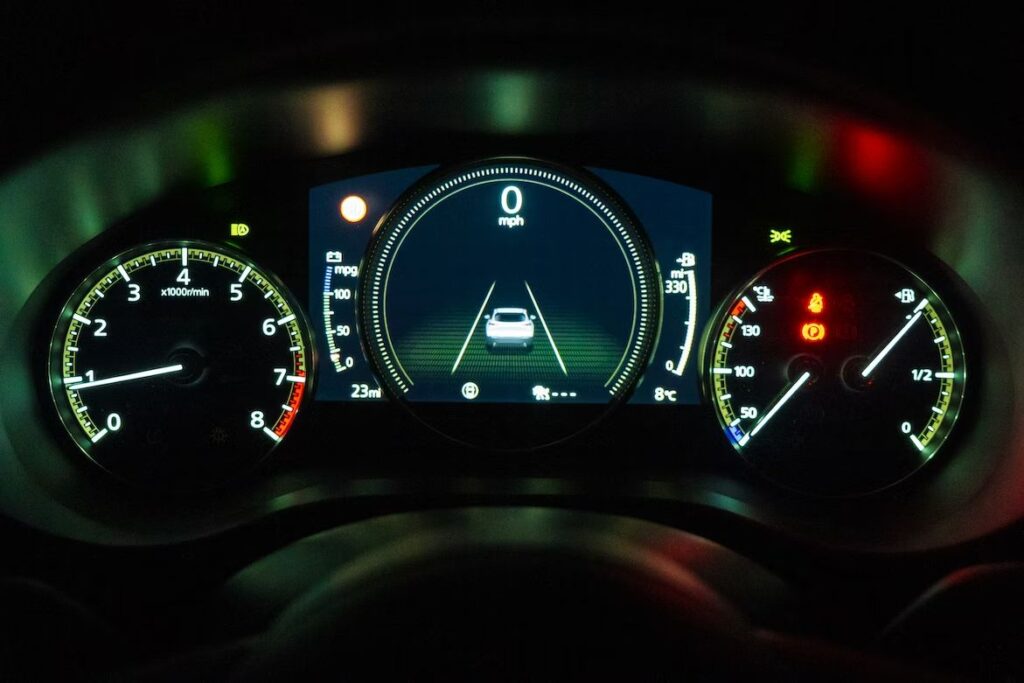 Sometimes the warning lights are legit. A customer from Fairlawn came in during a snowstorm with a traction control light that wouldn’t go off. He thought it was just the slippery roads messing with the system. But the scan showed a wheel speed sensor that had cracked from ice buildup and corrosion. Easy fix, but it would’ve caused bigger problems if left unchecked—especially with ABS depending on those readings too.
That’s the thing: you don’t know what’s going on until the car gets properly scanned. One dashboard light could mean a dozen different things depending on the conditions, the vehicle, and even how long the car’s been sitting outside. That’s where we come in.
When someone calls or walks into Rad Air asking about a warning light, we don’t jump straight to selling parts. We run the scan. We look at freeze-frame data. We check live readings from the sensors in question. And then we tell you what’s real and what’s not. No guessing. No fear tactics. Just the facts.
And in winter, timing matters. The same issue that’s a $90 fix today could be a $900 fix if it gets ignored and turns into a failed component down the line. A minor misfire caused by a sticky injector can turn into a blown catalytic converter if you keep driving through it. A weak battery that starts today might leave you stranded in a grocery store lot next week.
If you’re seeing a warning light and you’re not sure what it means, don’t assume the worst—but don’t ignore it either. Schedule a quick diagnostic at one of our shops. We’ve got locations all over Northeast Ohio, and chances are there’s a Rad Air not far from where you’re already driving.
Whether it’s the battery on its way out, a TPMS sensor waking up in the cold, or a deeper issue hiding behind a simple light, we’ve seen it before. We’ll check it out, give you a straight answer, and help you make the right call on what to do next.
Because when it’s 12 degrees out and the snow’s coming down hard on I-480, you don’t want to be second-guessing what that light on your dash is trying to say.
Schedule a diagnostic today and let us take a look. We’ll keep it honest, keep it local, and keep you moving.